
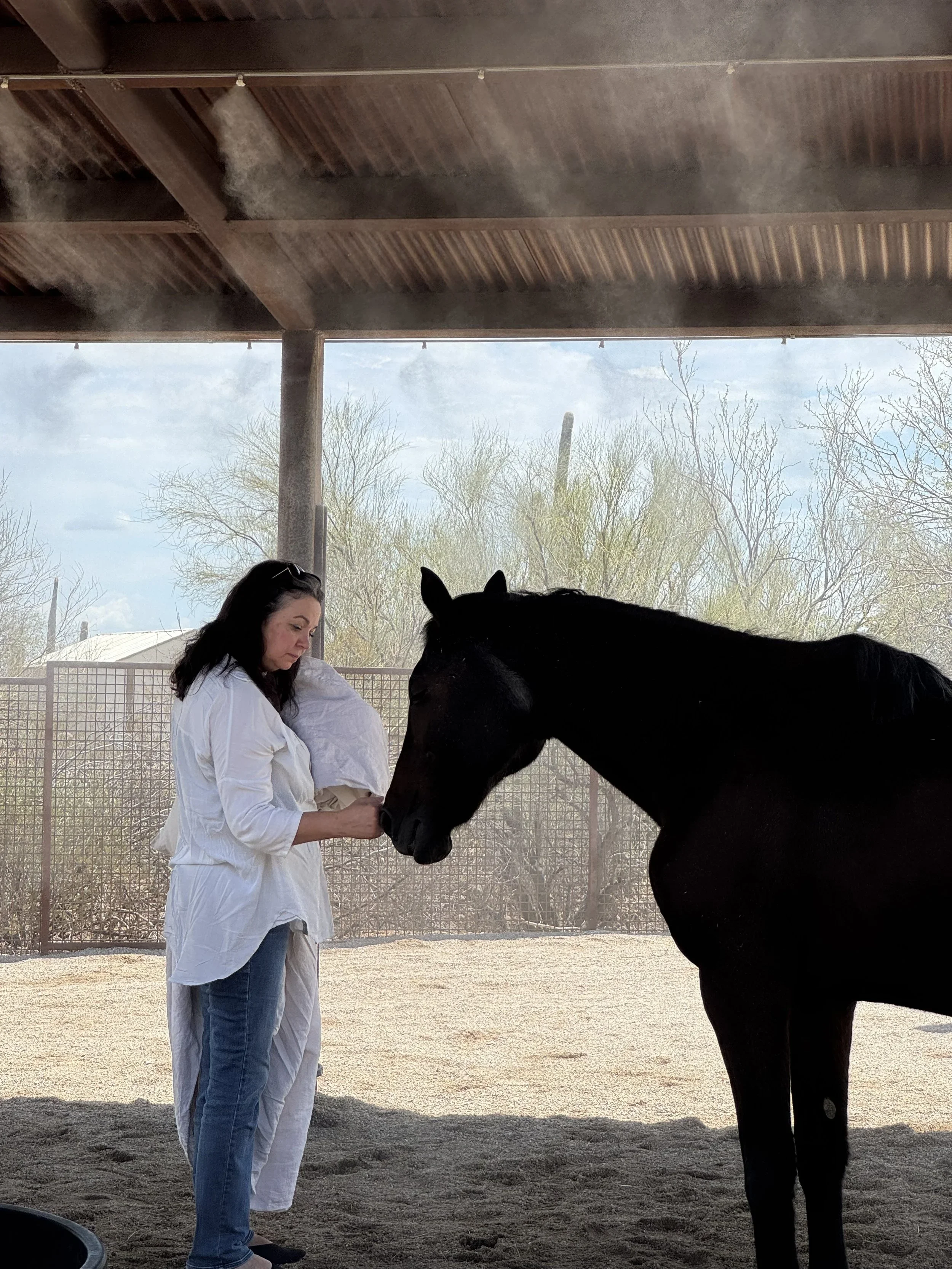
Equine-Facilitated Somatic Healing™
Equine-Facilitated Somatic Healing™ is a gentle, body-based approach for those navigating brain injury, post-concussion symptoms, trauma, overwhelm, or chronic dysregulation. Rooted in Somatic Experiencing® and informed by Polyvagal Theory, this work recognizes that injury and trauma can affect the whole person—not only thinking, memory, or cognition, but also the body’s sense of safety, capacity, energy, and connection.
When the system remains organized around protection long after the initial injury, symptoms may linger even when life looks functional from the outside. Fatigue, fogginess, anxiety, shutdown, sensory sensitivity, emotional overwhelm, and the feeling of not being fully yourself may all be signs of a system working hard to protect.
Rather than asking the brain to work harder, we support the body in finding safety at a pace it can sustain. Through sensation, breath, posture, movement, and subtle shifts in state, the nervous system is invited toward regulation, integration, and greater capacity for healing.
What you may be experiencing
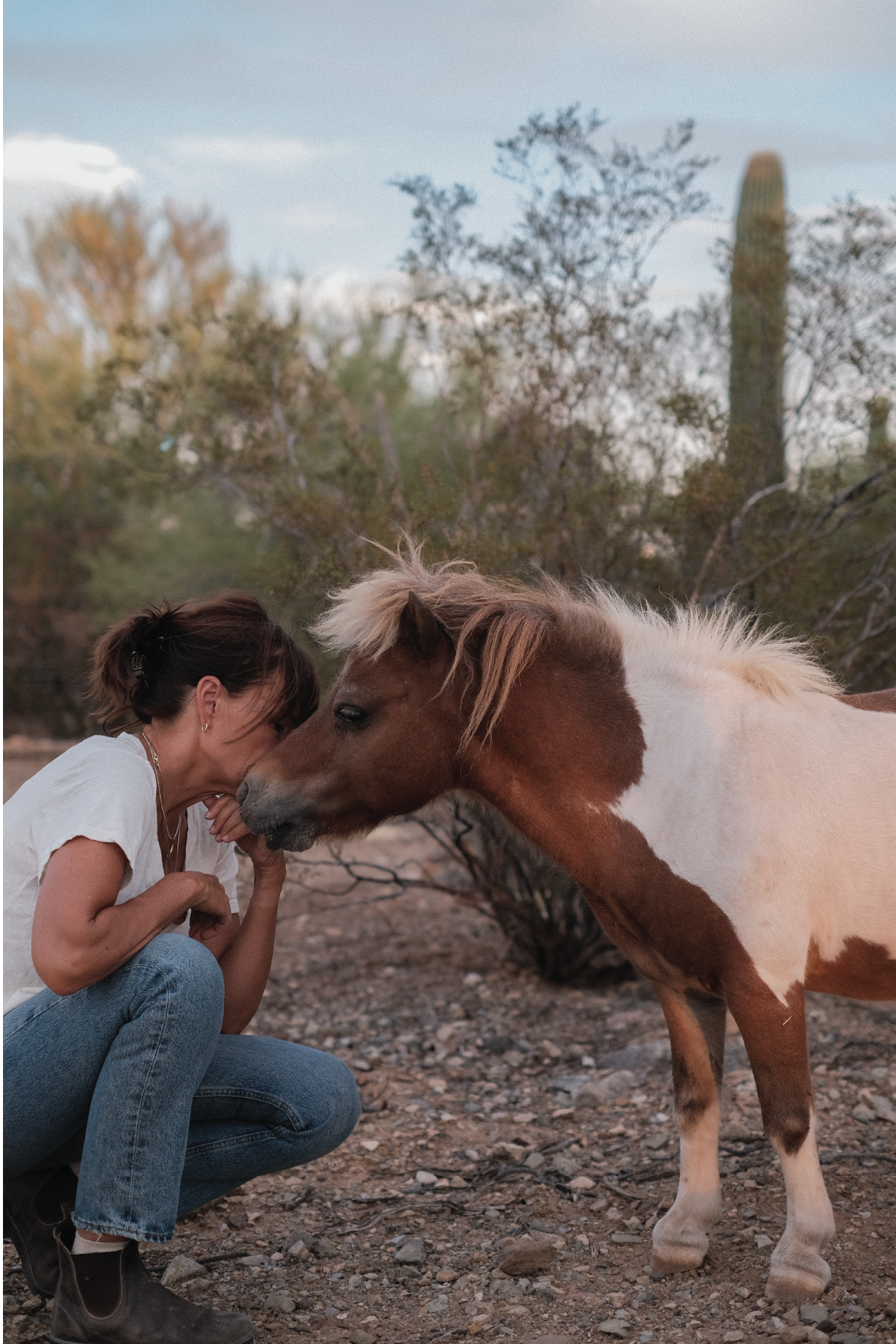
After brain injury, the nervous system may have a harder time knowing when it is safe.
Sound, light, movement, emotion, stress, conversation, or even ordinary daily demands can feel like too much. The body may become more easily overwhelmed, anxious, shut down, foggy, sensitive, or exhausted.
These responses are not signs of weakness. They are signs of a system working hard to protect.
When the body stays organized around protection, it can affect sleep, clarity, energy, emotional steadiness, connection, and the rhythms needed for recovery.
How we support regulation
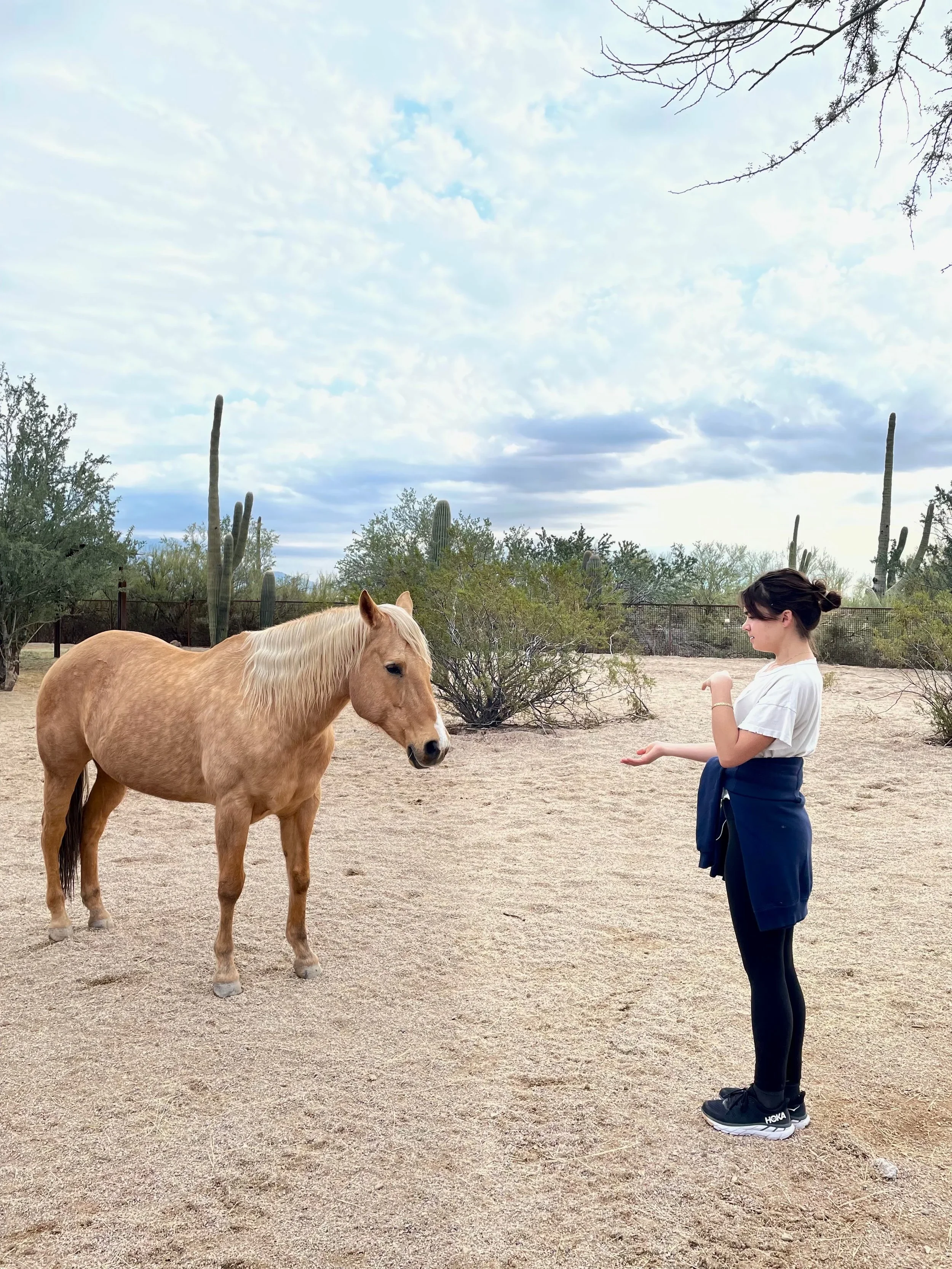
Somatic Experiencing® supports the nervous system gently and gradually. We work slowly, building safety and capacity in small, manageable steps so the body does not have to push through or become flooded.
Within the presence of the herd and the desert environment, the body receives steady, nonverbal cues of safety and relationship. This can support regulation without asking the brain to work harder — an important part of brain injury recovery.
As regulation becomes more available, symptoms may begin to ease, capacity can rebuild, and the body’s natural movement toward regulation, integration, and healing can unfold.
Table-Based Support
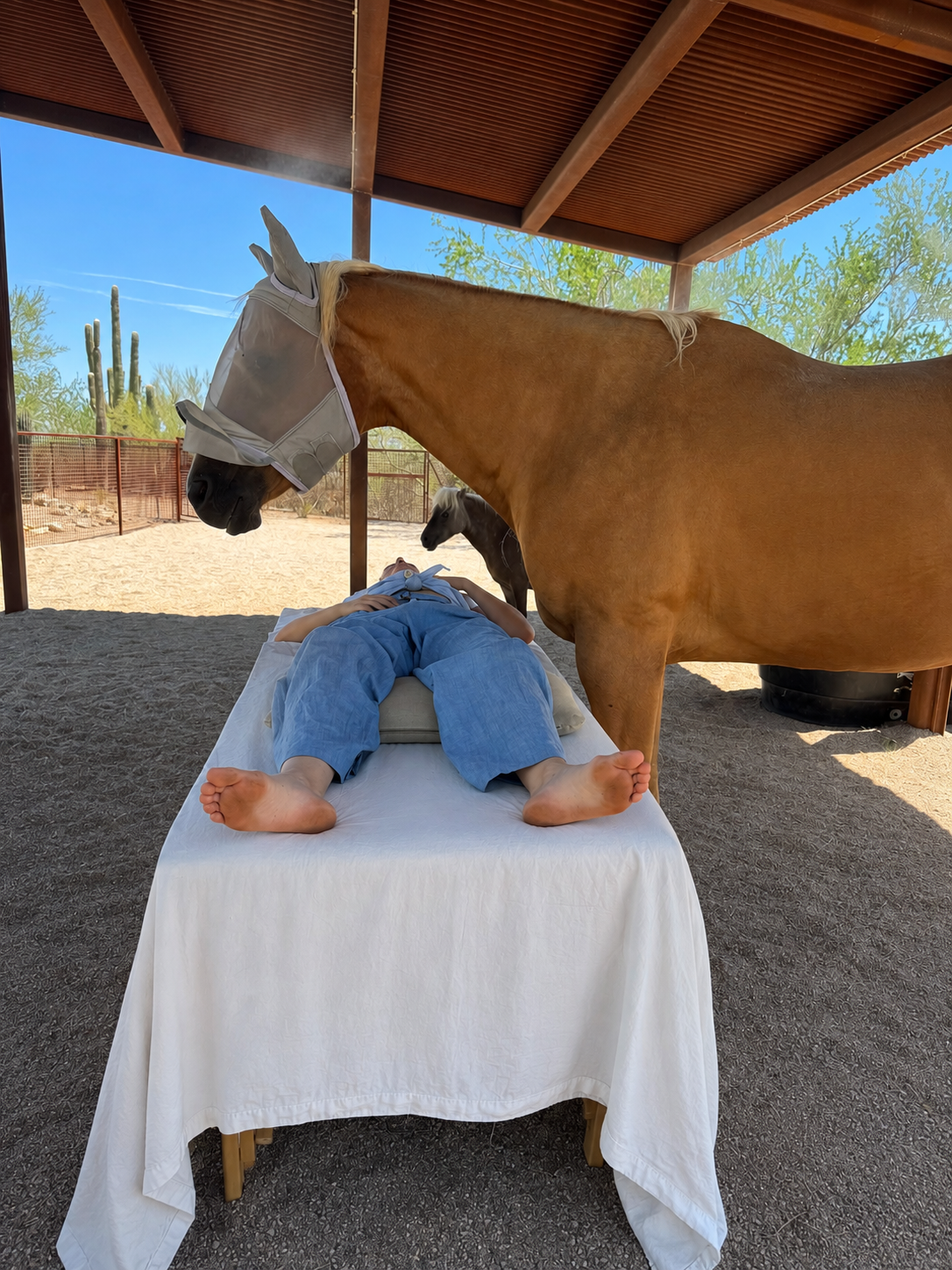
Table-based work is available as an optional extension of the session as safety and capacity grow. With the horses at liberty nearby, their presence, rhythm, and relational attunement can offer cues of safety to the nervous system.
Peggy remains with you throughout, tracking the nervous system and guiding the process. Somatic Experiencing® Touch, Reiki, and subtle energetic support may be woven in when appropriate.
You remain in choice throughout, with the work paced by your body and what feels manageable.
Session Details

90 minutes

$225 initial session

package rates available
Begin with a conversation
This first conversation is simply a place to begin — to share what is happening, ask questions, and sense whether this work feels right for you.
FAQs
-
Yes, virtual sessions are available for those who cannot travel to the Sanctuary. While the work at Congruence is is designed to unfold within the relational field of the herd and land, Somatic Experiencing® can also be effective remotely. Virtual sessions focus on nervous system regulation and capacity-building at a pace appropriate for recovery from brain injury.
60 minutes | $120 | Packages available with reduced pricing. Reach out for more information.
-
I am a fully certified Somatic Experiencing Practitioner (SEP), having completed the multi-year professional training through Somatic Experiencing International. This training includes foundational, intermediate, and advanced levels, as well as personal sessions, case consultation, and supervision.
Somatic Experiencing® was developed by Dr. Peter Levine and is a recognized body-based approach to trauma resolution. My work is also informed by ongoing study in nervous system regulation and my lived experience recovering from brain injury.
-
Many individuals diagnosed with post-concussive syndrome experience persistent symptoms such as fatigue, sensory sensitivity, headaches, cognitive overload, anxiety, or sleep disruption. These patterns often reflect a nervous system that remains organized around protection following the initial injury.
Somatic Experiencing® supports regulation and stabilization of the autonomic nervous system. As capacity builds and the system settles, symptoms related to chronic activation or shutdown may gradually reduce.
This work does not replace medical care, but it can be a meaningful component of recovery when symptoms linger beyond the expected healing window.
-
No. While I specialize in supporting those recovering from brain injury, I also work with individuals navigating stress, anxiety, trauma, life transitions, or those simply seeking a deeper connection to themselves and their nervous system. This work meets you where you are—whether you’re healing, growing, or remembering what safety feels like in your body.
-
No prior horse experience is required. Sessions are not about riding or horsemanship. The horses remain at liberty, and your role is simply to notice your internal experience within the relational field.
Many individuals navigating brain injury find that being around horses in this way feels grounding rather than overwhelming. The focus is on nervous system regulation and attunement — not skill or performance.
-
If you feel uncertain or nervous around horses, that is welcome information. We work at a pace your nervous system can tolerate, and there is no pressure to interact beyond what feels safe.
-
You’ll be invited to sense into the herd and notice any particular connection, and you may be guided to make an energetic ask. But in deep respect for their autonomy, it’s the horses who ultimately choose whether or how they engage. Even when not physically close, they’re always participating in subtle ways.
-
No. Out of respect for the herd’s healing journeys and agency, all sessions take place on the ground. The focus is on relational presence, not performance or control.
Have another question? Reach out to info@congruencetucson.com